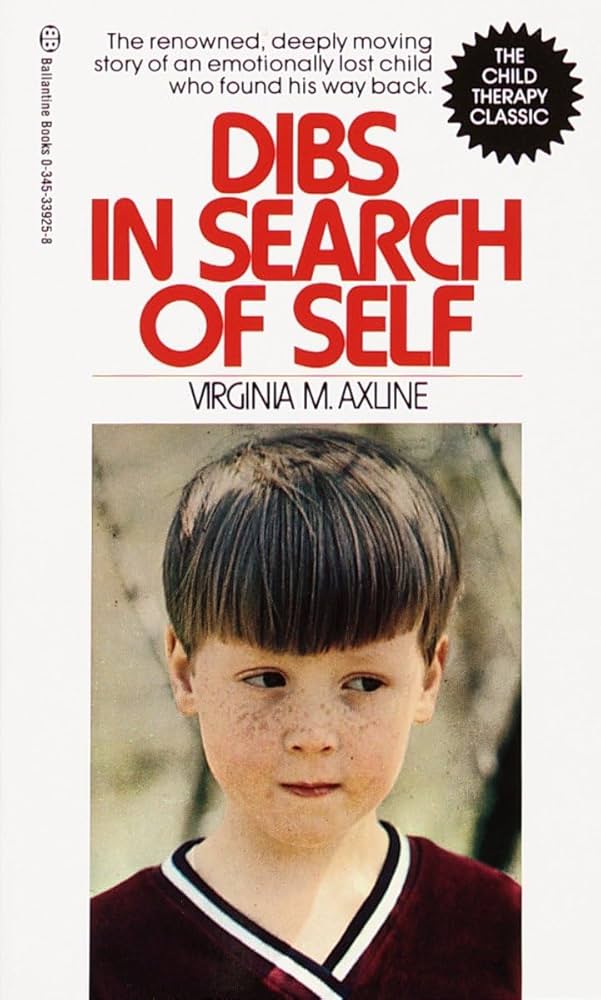
I first heard of this book when one of my university lecturers mentioned it in passing. It’s a story of a boy, his alias being Dibs, and his journey of play therapy with Virginia Axline, a clinical psychologist and author of this book.
I have always known that working with children is something I wanted to do. Children are raw, they are honest, they are everything we were before society moulded us to its liking. Reading this book has only affirmed this decision more, understanding how malleable children are by their environment, the importance of non-directive play and the things we can learn from their play. Everything they do points to something that they feel internally, after all, human beings react and perceive the rest of the world through the lens of their own.
In the story, we see Dibs start off as an emotional and socially closed off five year old. We observe week after week, the little progress that he makes, as detailed by Axline. Ultimately, this book was a testament to how children, like us all, need a space to feel heard in their struggles. The growth that we so desperately want to see in them flourishes naturally when an emotionally safe space is present.
“I wouldn’t want God to be like Papa. Because sometimes I don’t think Papa loves me. And if I believed in God like Grandmother does, I’d want God to love me. But Grandmother says that Papa does love me. But if he does why don’t I know it? Grandmother loves me and I love her and I know because I feel it deep inside of me.“
We see the way Dibs struggles to understand the meaning of love, so transparently and so honestly the way children do. Someone once told me that children are her greatest teachers – and through this book a learned a glimpse of what she meant.
As the book draws to an end, Dibs says “she [Axline] is my very first friend”. This book has shown me how little words children have to express their thoughts, how much a safe space can mean to someone and how beautiful human relationships can be.
In Axline, Dibs learns the meaning of human relationships, he learns to feel, he learns to interact with another human. More importantly, he learns that he matters, that his pain has a place to be heard, that the world isn’t a lonely place. Isn’t that what we all want?